 Wiser by Day
A person, a text and uncertain evidence
Zhuangzi, also called Zhuang Zhou or Chuang-tzu, is associated with late fourth-century BCE Chinese philosophy. Much less is securely known about his life than a smooth modern biography can suggest. Stories involving him are not automatically documentary evidence.
- Late fourth century BCE · The thinker
The broad historical setting is firmer than a detailed year-by-year life. Avoid treating conventional precise dates as a complete biography.
- An evolving collection · Many voices
The book bearing his name contains material from different hands. Its Inner Chapters are 1–7; assigning even these directly to one author remains debated.
- Guo Xiang · Died 312 CE
A much later editor shaped the surviving 33-chapter collection. The person’s lifetime and the received book’s history are different timelines.
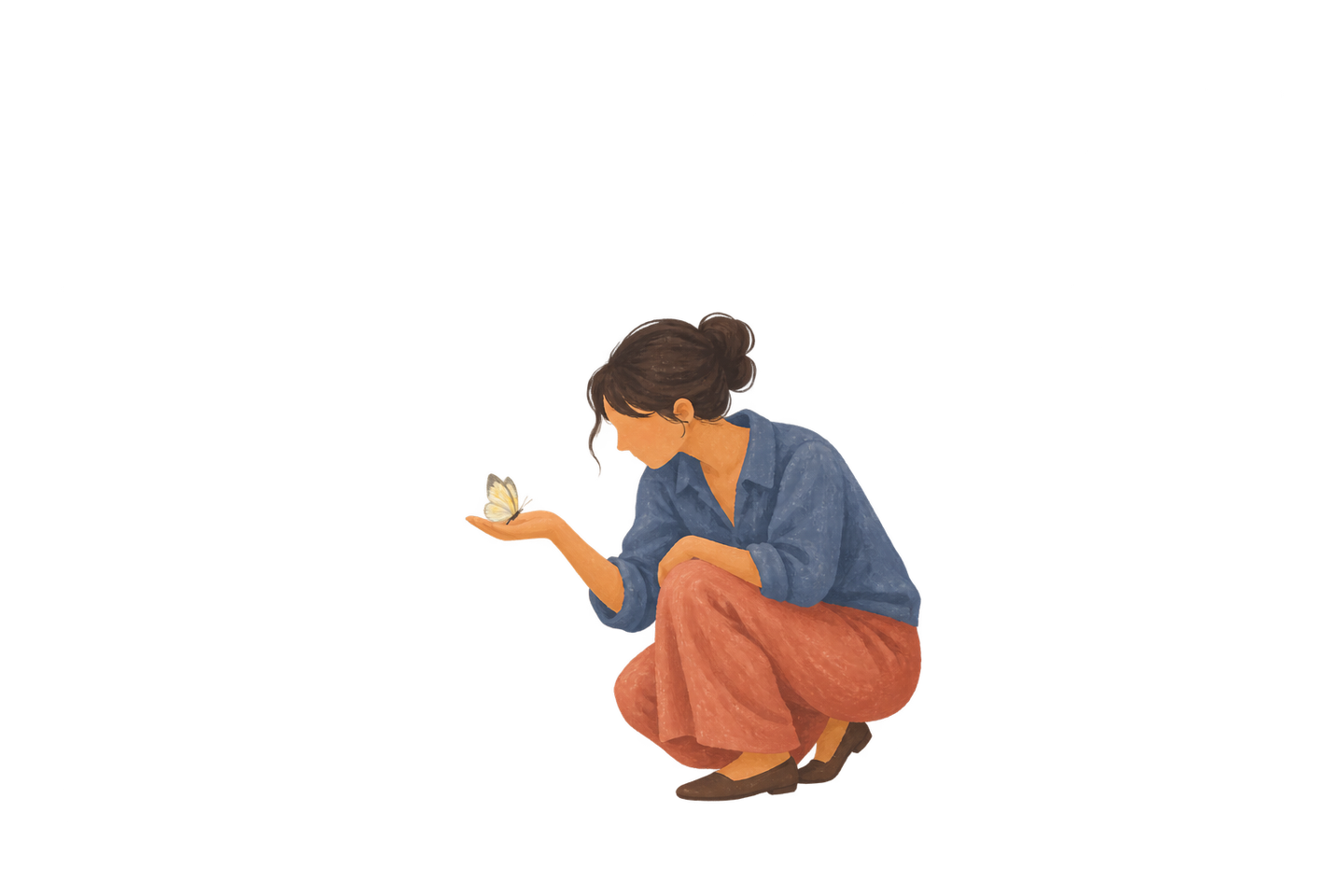
This outline follows the historical and textual cautions in the Stanford Encyclopedia of Philosophy. The illustration offers a modern way into a question, not access to the philosopher’s appearance.
Start with the butterfly, then keep reading
The end of chapter 2 presents Zhuang Zhou dreaming he is a butterfly, then waking and wondering about the relation between the two identities. This is a literary philosophical episode, not a verified report from which we can reconstruct a particular night.
Instead of deciding immediately that it means “nothing is real,” ask what question it opens. What makes the waking account feel authoritative? What has changed in the position from which the story is told? The episode can challenge confidence without supplying a licence to believe any claim you prefer.
Robert Eno’s translation labels the passage 2.20. Other editions may divide the chapter differently. Use the chapter number and the butterfly episode together when locating it.
Another entry: a skilled cook slows down
Chapter 3’s Cook Ding episode describes skilled carving that follows the structure of what is being worked on. Importantly, the cook still becomes attentive and slows at a difficult point. Read the whole episode before turning skill into a slogan about effortless success.
The practical question we take from it is an editorial application: can familiarity help you notice a difficulty instead of making you rush past it? It is not a claim that a story supplies instructions for your profession or proves that expertise never requires conscious effort.
Try a change of perspective in an ordinary dispute
You think a colleague’s short messages are rude. They think your long messages bury the request. You could exchange descriptions of each other’s personalities for weeks without identifying the problem each person is trying to solve.
Try writing two accounts of the same exchange. In one, describe the work as you experienced it: missing explanations, an abrupt deadline, an unanswered question. In the second, describe what the colleague might have been managing: several requests, limited time and a need to know which decision was yours.
The second account is a hypothesis. Ask whether it fits; do not invent a secret explanation and treat it as fact. Then make a concrete experiment together: lead with the request, include the necessary context and agree when a conversation is better than another message.
Changing perspective may reveal a solvable mismatch. It may also reveal conduct that still needs challenging. Understanding why someone acts does not automatically justify the action. This limit matters when a powerful person expects everyone else to be endlessly accommodating.
Keep the unresolved questions
A book that unsettles certainty can itself be read too certainly. Notice when you have converted every strange story into the same familiar lesson: relax, be yourself or stop caring. What detail in the story resists that conclusion?
Equally, uncertainty cannot do every practical job. You still need to check a figure, keep a promise or respond to someone’s need. A useful reading question is how examining your outlook changes those actions, rather than whether you have escaped every judgment.
Keep a note of what you reject or do not understand. The text’s humour and unusual voices invite interpretation; they do not remove the need to explain why one interpretation fits better than another.
A route into the book
Begin with the end of chapter 2, then return to enough of that chapter to see the surrounding concern with different outlooks. Next read the Cook Ding episode in chapter 3. Eno’s freely accessible teaching translation supplies notes and section labels; keep his name with any wording you quote.
Beside each passage, write three lines: what happens, what it makes you question, and what your first explanation leaves unanswered. This is a modern reading aid, not a method attributed to Zhuangzi. The point is to let the story make your question more precise before you hurry toward an answer.