 Wiser by Day
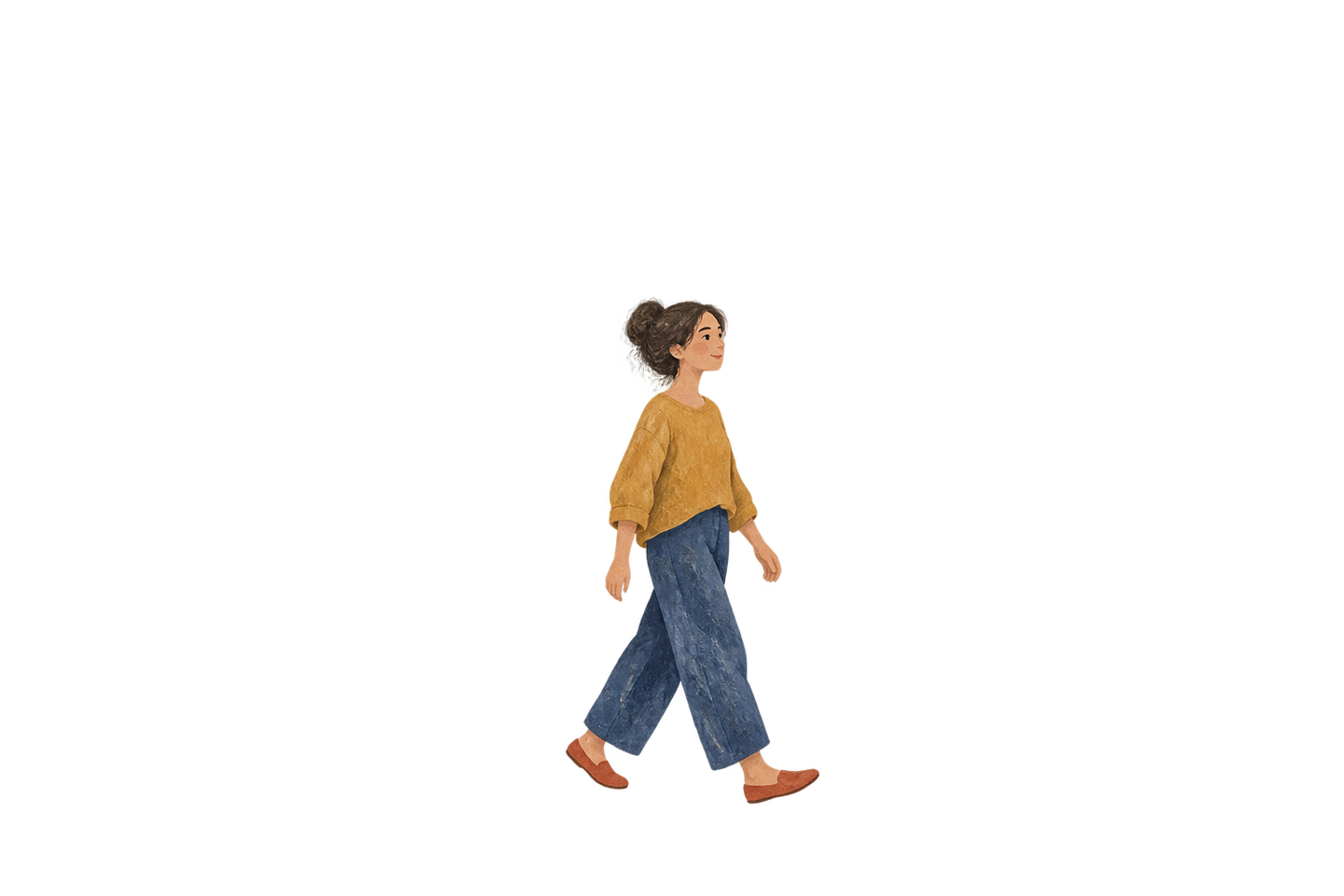
The short walk you scarcely remember
You move from one room to another while rehearsing a message. On arrival, you can recall the imaginary conversation more clearly than the few steps you just took. Nothing unusual has happened; attention was occupied elsewhere.
This exercise gives a small part of ordinary movement your attention. It is not a distance target, a test of balance or a method for producing a particular feeling. Choose a familiar, clear place where you can pause. Read the instructions before moving, keep your eyes open and put the screen away while you walk.
Five steps, at your own pace
An original modern exercise prompted by DN 22’s attention to walking and other postures, not a traditional five-minute sequence. Timing is optional. Use timer controls only while safely stopped; you do not need to watch the screen or finish each step in a minute. Nothing starts automatically.
Timer is optional. Nothing starts automatically.
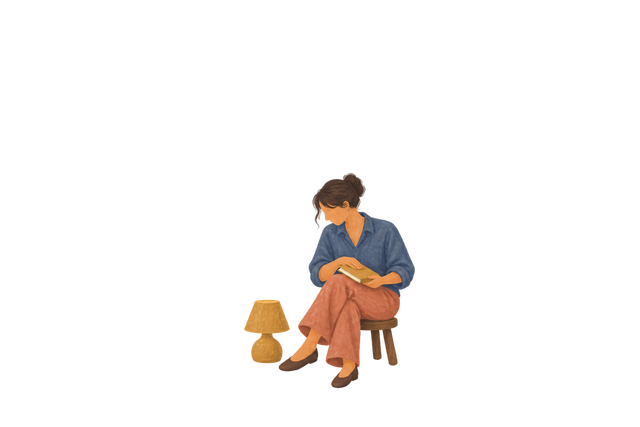
- Step 1 — Choose and pause. Find a short, clear route away from traffic, stairs and other obstacles. Stop before beginning. Notice your present posture and what is supporting you. If walking is unsuitable, choose a comfortable seated or standing version instead.
- Step 2 — Notice one movement. Walk at a comfortable ordinary pace. Keep your eyes open and attend first to the route. Notice one feature of stepping, such as contact with the floor, without trying to perfect how you move. In the stationary version, notice one contact point instead.
- Step 3 — Include a transition. At a safe point, stop. Notice that walking has become standing. Turn only when you have checked the space. If remaining seated, notice the pause between one small movement and the next. There is no need to make the transition unusually slow.
- Step 4 — Return when attention wanders. If you find yourself planning or judging, acknowledge what caught your attention and return to one step or contact point. You do not need an empty mind. If something around you needs a response, respond to it.
- Step 5 — Finish deliberately. Come to a comfortable stop before looking at the screen. Name one thing you actually noticed, or simply note that the mind was busy. Choose what to do next. There is no score, required mood or extra distance to complete.
You remember the errand halfway through
Imagine practising along a clear stretch of hallway. After several steps you begin composing the message again. You might decide the session has failed and start walking with exaggerated care. Now your attention is on appearing attentive rather than on the movement.
Try the smaller response in step four. Recognise that you were rehearsing the message, check the route and notice the next contact with the floor. If the message needs sending urgently, you can stop the practice and attend to it. Choosing to deal with a real task is different from being carried through an imaginary conversation without noticing.
The reading prompt behind the exercise
In DN 22, the Maha-satipatthana Sutta, the body section includes knowing when one is walking, standing, sitting or lying down. Its following passage addresses alertness during everyday movements. The linked Thanissaro Bhikkhu translation provides this wider context.
The discourse concerns Buddhist training and liberation, not simply taking a pleasant break. Our short sequence, timing, stationary option and hallway example are modern editorial adaptations. They borrow a limited prompt about noticing posture and movement; they do not replace the discourse or a teacher’s full account of practice.
Adapt the activity rather than forcing the result
Keep the route and pace suited to your circumstances. This exercise has no special gait, requirement to close your eyes or instruction to ignore your surroundings. You can practise one contact point while seated, shorten the session or stop. Do not continue a movement merely to finish the timer.
If attention keeps wandering, record that without turning it into a character judgment. If a feature of movement is uncomfortable to attend to, choose another ordinary point of contact or leave the exercise. The useful result is a more accurate account of what you noticed, not a report of how calm you believe you ought to have become.
Before your next routine walk, remember one part that was useful. You might pause before setting off, notice a transition or put the phone away until you have stopped. Let that be enough for the next attempt, rather than adding more instructions every time.