 Wiser by Day
The cup is a question
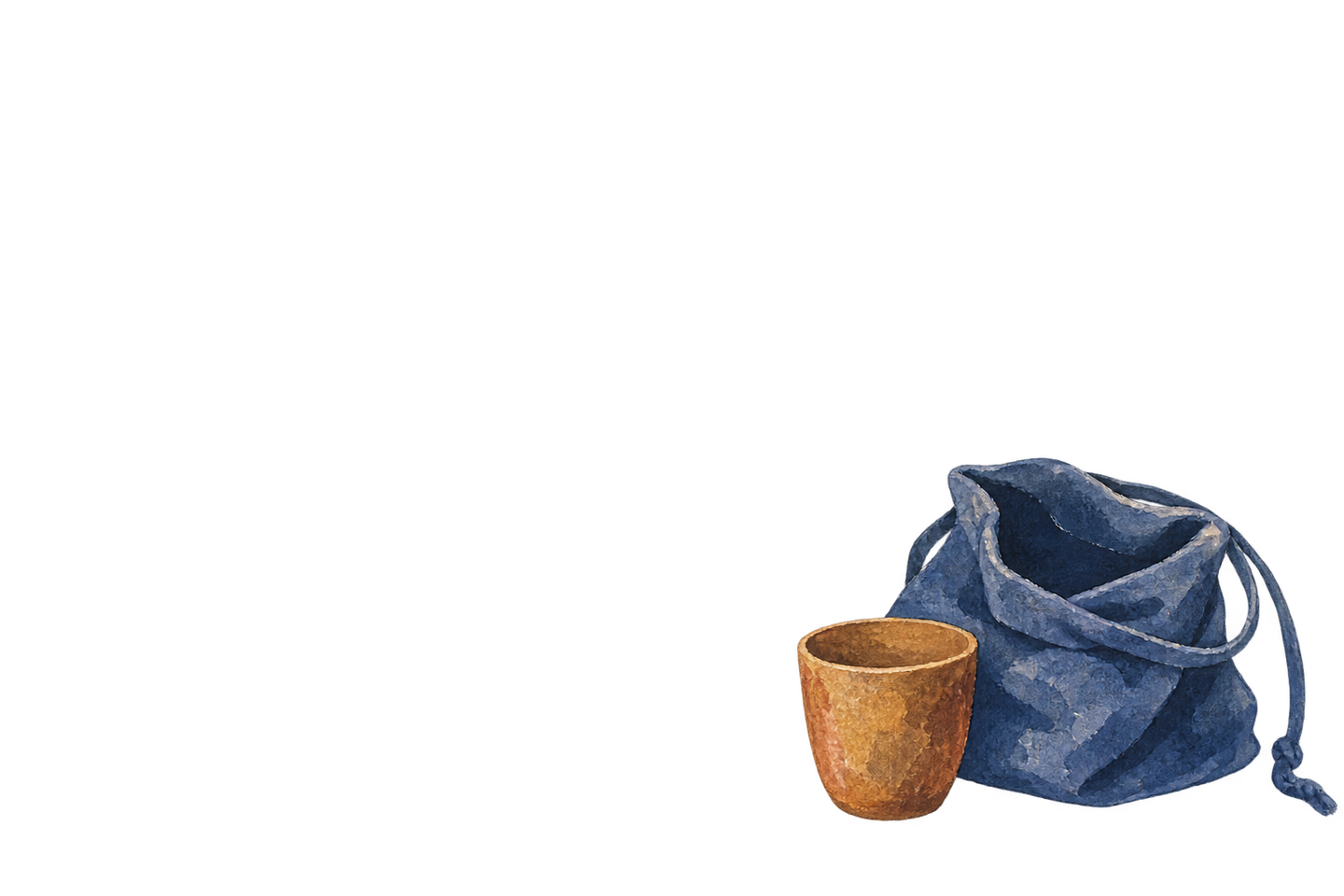
In Diogenes Laertius’s account, Diogenes of Sinope sees a child drinking from cupped hands and discards his own drinking cup. The anecdote appears at Lives of the Eminent Philosophers 6.37. It is a story preserved in a later collection, not a witnessed scene we can independently reconstruct.
The story can prompt a question about need: have I mistaken a familiar possession for a necessary one? It does not establish that you should discard a cup, that fewer possessions always mean greater wisdom, or that another person’s lack of resources is admirable. Those would be additional judgments, requiring reasons of their own.
A life sketch with its uncertainties visible
Diogenes is associated with the ancient Cynic tradition, which challenged convention through demanding forms of life. The familiar English use of cynical for distrust of everyone’s motives is an unhelpful starting point here. Read for the ethical challenge, while remaining willing to question how it is delivered.
Fourth century BCE · Sinope
Diogenes came from Sinope. Accounts connect his departure with a currency scandal, but disagree about responsibility and circumstances. See Laertius 6.20–21.
Athens · a reported philosophical formation
Stories place him in Athens and connect him with Antisthenes. The personal teacher-pupil relationship is disputed; it should not be treated as a secure turning point.
Corinth and a traditional end date
Later accounts associate him with Corinth. The usual death date is 323 BCE, but the accounts of his later life and death vary. This is a conventional outline, not a precise itinerary.
What his challenge asks you to examine
Diogenes makes an awkward reading companion if you want an ancient authority to confirm that you are already independent. The point of bringing him into a modern reflection is to put an assumption under examination, including an assumption about your own good taste or courage.
Consider an ordinary purchase you are planning. What will it enable you to do? Would a simpler alternative serve the purpose? Are you buying something useful, seeking admission to a group, or responding to the thought that a person like you should own it? More than one answer can be true.
Then ask a second question: who makes your apparent independence possible? If someone else maintains the home, cooks the food or absorbs the inconvenience while you practise simplicity, your account of needing little is incomplete. This is our modern question, not a claim that an ancient anecdote has settled the distribution of responsibilities in your household.
Simplicity can acquire its own audience
Laertius 6.26 preserves an exchange in which Plato challenges the pride displayed in Diogenes’ attack on luxury. Versions of the exchange differ even within the account. Read it as a tension in the tradition: contempt for display can itself become display.
That tension matters when a useful reduction becomes a badge of superiority. You may discover that one change makes daily life easier. It does not follow that people who make different choices are foolish. They may have needs, dependants or constraints that your comparison leaves out.
Public provocation also has costs. A question about convention deserves more than the assumption that breaking a rule is automatically brave or truthful. Ask what the rule protects, whom the challenge affects and whether a less humiliating action would reveal the same problem. You can take a philosophical challenge seriously without endorsing every tactic attributed to its exemplar.
Read the anecdotes as competing evidence
Begin with Julie Piering’s Internet Encyclopedia of Philosophy profile for the difficulties of the biography. Then read Laertius 6.20–26 alongside 6.37. Notice where a narrator names a source, supplies alternatives or assigns the same incident to someone else. Those details belong to your reading, not to the footnotes you can safely ignore.
The surviving material does not give you a securely authenticated book written by Diogenes himself. Treat a memorable line as an invitation to investigate its setting rather than as his final answer to a modern problem.
Try one modest examination
Choose one low-stakes habit or possession. Describe its actual purpose before deciding whether to change it. If you try a simpler arrangement, check whether the purpose is still met and whether the change creates work for another person.
Keep what is useful, including the possession if it remains useful. This original reflection is not a Cynic initiation or a test of your ability to endure deprivation. Its aim is to make your reason clearer, with less reliance on the approving or disapproving audience you imagine.