 Wiser by Day
A small book with a large interpretive history
You open the Daodejing, also called the Tao Te Ching, and find a few lines that seem to recommend doing less. You could turn that into permission to postpone an awkward task. Before doing so, ask what kind of action the chapter is questioning and what else it says.
The received text is arranged in 81 chapters. It is traditionally associated with Laozi, but the identity of the author and the formation of the text are debated. A beginner does not need a settled biography to read carefully; the uncertainty does matter when someone presents every chapter as the personal advice of one securely documented sage.
Four chapters to read in conversation
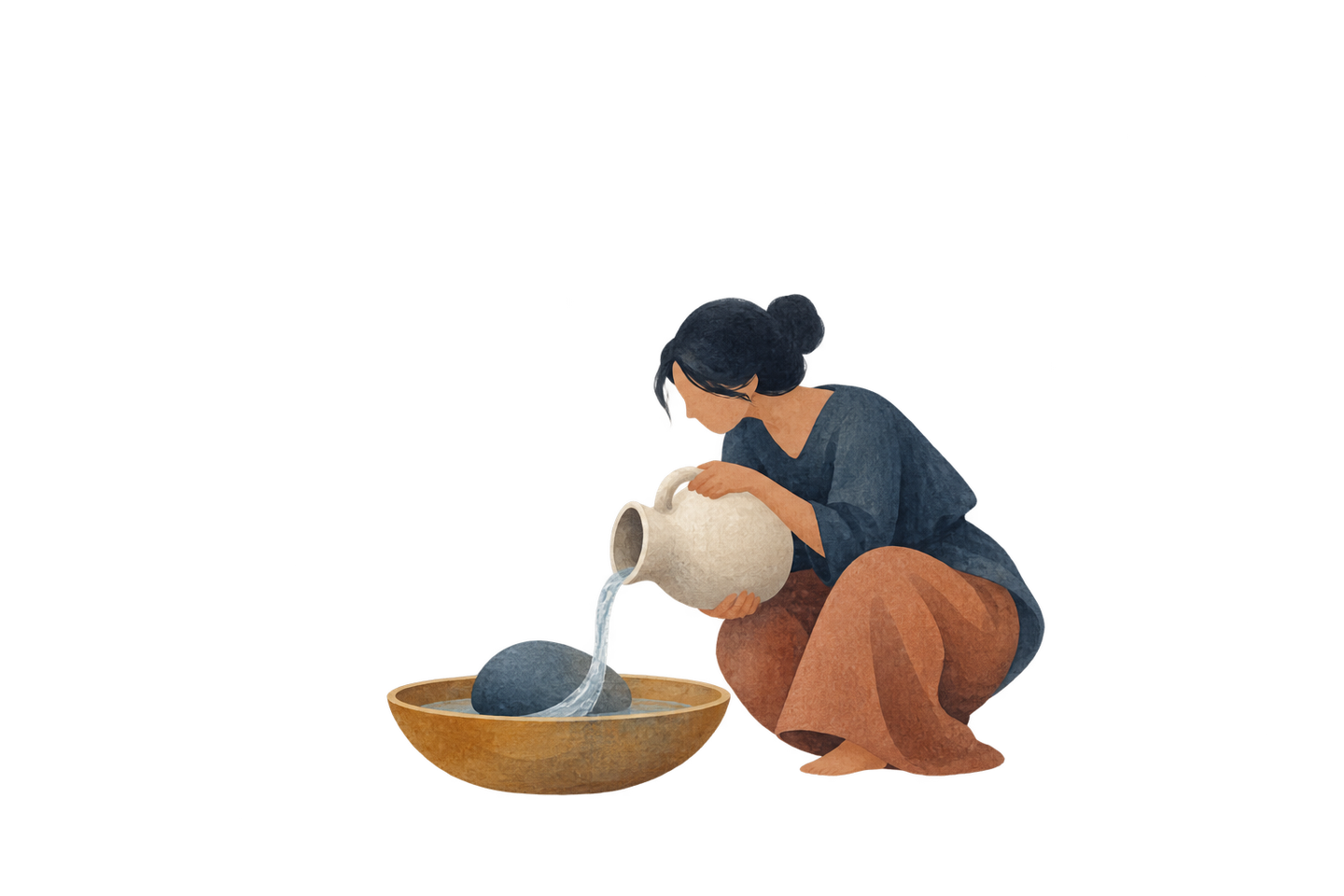
- Chapter 8 · Water
Consider how the image joins benefiting others, a low position and avoiding contention. What disappears if you read only softness?
- Chapter 11 · The vessel’s space
Read the wheel, vessel and room together. What makes an object useful besides its visible material?
- Chapter 48 · Less doing
Notice the contrast between increasing and diminishing. Ask what sort of accumulation is being challenged.
- Chapter 64 · Before disorder
Read its concern with beginnings beside chapter 48. Does less forcing mean leaving every small problem alone?
The links open James Legge’s complete translation. Find the chapter number indicated. This route is our editorial selection, not the book’s only proper order.
Keep the translation visible
Legge’s nineteenth-century English includes parentheses, formal phrasing and the spelling Tao. A different translator may render central terms differently. Treat those choices as part of the reading rather than assuming that an appealing English sentence has only one possible form.
Keep the translator’s name and chapter number beside a saved line. If two editions differ, first identify the difference: an added explanation, a different verb or a different way of expressing agency. You can notice the interpretive choice without pretending to resolve the Chinese from English alone.
Our guide paraphrases selected images and asks questions. It does not supply a new translation, or claim that terms such as dao and wuwei can be exhausted by one modern slogan.
Read “less” against a real task
Suppose a shared document has become difficult to use. You respond by adding more reminders, more headings and another approval stage. Everyone now spends longer finding the current version.
A question prompted by the reading is whether another addition will help, or whether removing a competing version would make the useful work easier. That is a modern example of examining an intervention, not a claim that the book contains a document-management method.
You still need to identify the correct version and tell people where it is. Leaving the confusion untouched does not become wise merely because it involves less immediate effort. Use chapter 64 to complicate the convenient reading of chapter 48, rather than making one chapter cancel the other.
Leave difficult material in the book
The text is not solely a collection of private wellness reminders. Its discussions include governing, power and the conduct of a sage. A reading focused on your desk or conversation is deliberately limited. Return to the political context when an individual application seems too smooth.
You may disagree with a chapter’s implications or with a translator’s explanation. Write that disagreement precisely. Which claim troubles you, and what would accepting it ask you to do? A clear objection is a better companion to reading than quietly replacing the chapter with advice you already like.
A manageable first week
Read one of the four chapters on each of four days. On the fifth, revisit the pair that seemed hardest to reconcile. Make a short note of an image, a question and an action you are considering.
Before acting, check the needs of the actual situation and the people affected. The chapter can sharpen attention; it cannot take responsibility for the decision. Keep the note small enough that you can return to the words and see whether your first interpretation still fits.