 Wiser by Day
You have already defended the plan
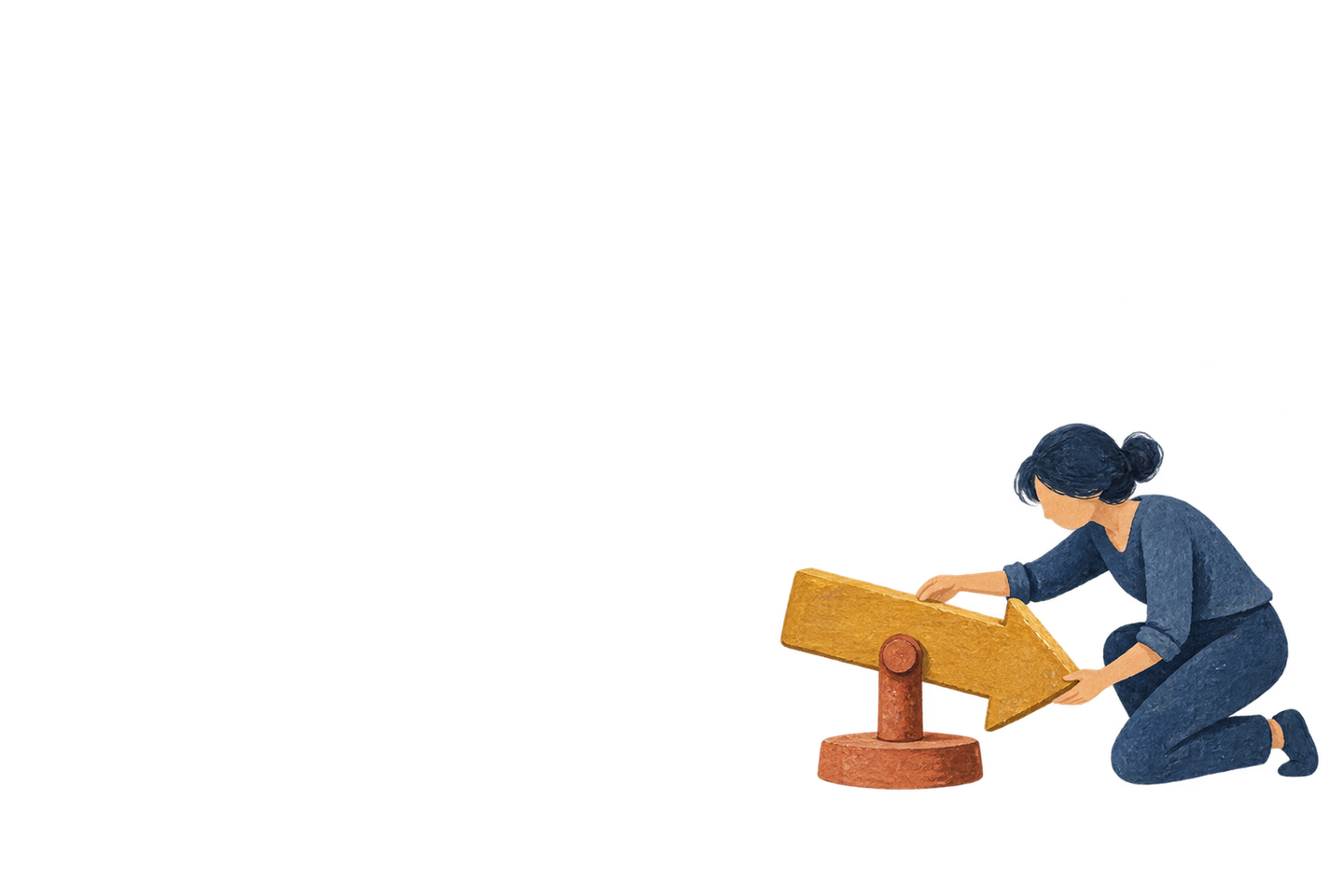
You recommend a way to organise a shared task. You explain it twice and answer several objections. Then a colleague produces information you did not have: the person you were relying on will be away. The plan now rests on an assumption that is false.
It would be easy to keep arguing because everyone has heard you argue. It would also be easy to accept the colleague’s whole alternative without examining it. A useful correction asks something more specific of you: identify what has changed, then decide what follows.
Three possible replies
Protect the old position
We have spent enough time on this. Let us stick to the plan. The wish to avoid another discussion is understandable, but it does not answer the new information.
Give away the whole decision
I was wrong, so you should decide everything. This treats one mistaken assumption as proof that you have nothing useful left to contribute.
Revise the part that needs revising
I assumed Sam would be available. That changes the handover. Let us check whether another person can cover it before choosing a replacement plan.
These are original examples, not a test of your character. You may need a moment before answering, especially if the correction arrived in a humiliating way. You can object to that treatment while still checking whether the information is sound.
A short prompt from Marcus Aurelius
In Meditations 8.16, Marcus connects following a correction with freedom rather than its loss. In George Long’s translation, the person who revises an opinion can still act through their own judgment and understanding. Persistence in error is not the only way to remain responsible for a decision.
This is a reading prompt from Marcus’s philosophical reflections, not evidence that he always welcomed correction. Our meeting example and the exercise below are modern applications. The passage does not make another person’s confidence a reason to agree, or turn every disagreement into proof that you are mistaken.
Ask what the correction actually establishes
Separate the fact from the conclusion. Sam’s absence may be confirmed by a schedule; the claim that the whole project must be cancelled still needs an argument. Ask where the information came from, whether it is current and which part of the decision depends on it.
Sometimes you cannot settle the question immediately. You can say that the information would change your view if it is confirmed, then agree who will check it. That is different from demanding impossible certainty to avoid moving at all. Name a realistic check that could settle the particular uncertainty.
If the issue falls outside your experience, ask someone who has the relevant knowledge. You remain responsible for how you use their advice, but responsibility does not require doing all the investigation yourself. Nor should a person with less authority have to fight alone to make a factual correction heard.
Let the revised judgment reach the people affected
Changing your private view may not be enough if others are acting on what you said. Return to the shared document, message or arrangement. State the corrected assumption and the practical consequence plainly. You do not need to make the correction an account of your entire personality.
For example: I said the handover could happen on Friday, but I had the availability wrong. We need to agree a different person or date. That gives others information they can use. If the error created extra work, acknowledge it and offer a specific repair that is within your responsibility.
Avoid turning a visible change of mind into a performance of endless uncertainty. After checking the relevant point, you may have a good reason to choose and act. Future evidence can still justify a further revision. A decision can be provisional without being casual.
Write the change in three lines
Choose one small opinion you have recently revised. Write what you previously thought, what information changed it and what action follows. Keep the second line specific enough that another person could understand the reason. Being embarrassed is a feeling to notice; it is not, by itself, the evidence.
If there is no clear reason yet, leave the question open rather than invent one. If there is, consider whether anyone needs the corrected information. The point is to practise making a change intelligible and useful, rather than merely announcing that you are open-minded.