 Wiser by Day
The opening warning
“Take care that thou art not made into a Caesar”Marcus Aurelius, Meditations 6.30
Translated by George Long · Opening excerpt
This is only the opening of a longer entry. Read the whole passage in the linked edition before treating the warning as a complete argument. The image of being dyed, which follows in Long’s translation, sharpens the concern that a position can affect the person occupying it.
An emperor gives himself a warning
Marcus writes from an imperial position. The sentence is therefore more demanding than advice to ignore job titles or dress simply. Read it as a warning about what his office could make of him, rather than as evidence that he had already escaped its effects.
The entry also names moral and religious commitments. Later it turns to Antoninus as an example, recalling qualities Marcus wishes to follow. That example belongs to the text’s own account of a ruler; it is not an independent audit of the reign. Keep the self-directed reminder distinct from a historical verdict.
George Long’s older English is retained in the excerpt. The section number is 6.30: Book VI, entry 30. The MIT edition supplies the full Book VI text; a numbered Wikisource edition is included in the reading notes to make the location easy to check.
Look for the exception that the role is being asked to grant
One useful modern question is whether a role has begun to supply exceptions you would question in someone else. You manage a small project, so you stop explaining changes. You organise a family event, so objections start to sound like ingratitude. Your responsibility may be real; the exemption from answering reasonable questions does not automatically follow.
This application concerns small forms of authority, whose stakes differ greatly from imperial rule. It does not equate a project organiser with an emperor or reduce the Roman political setting to office etiquette. The connection is narrower: examine a temptation to let position replace reasons.
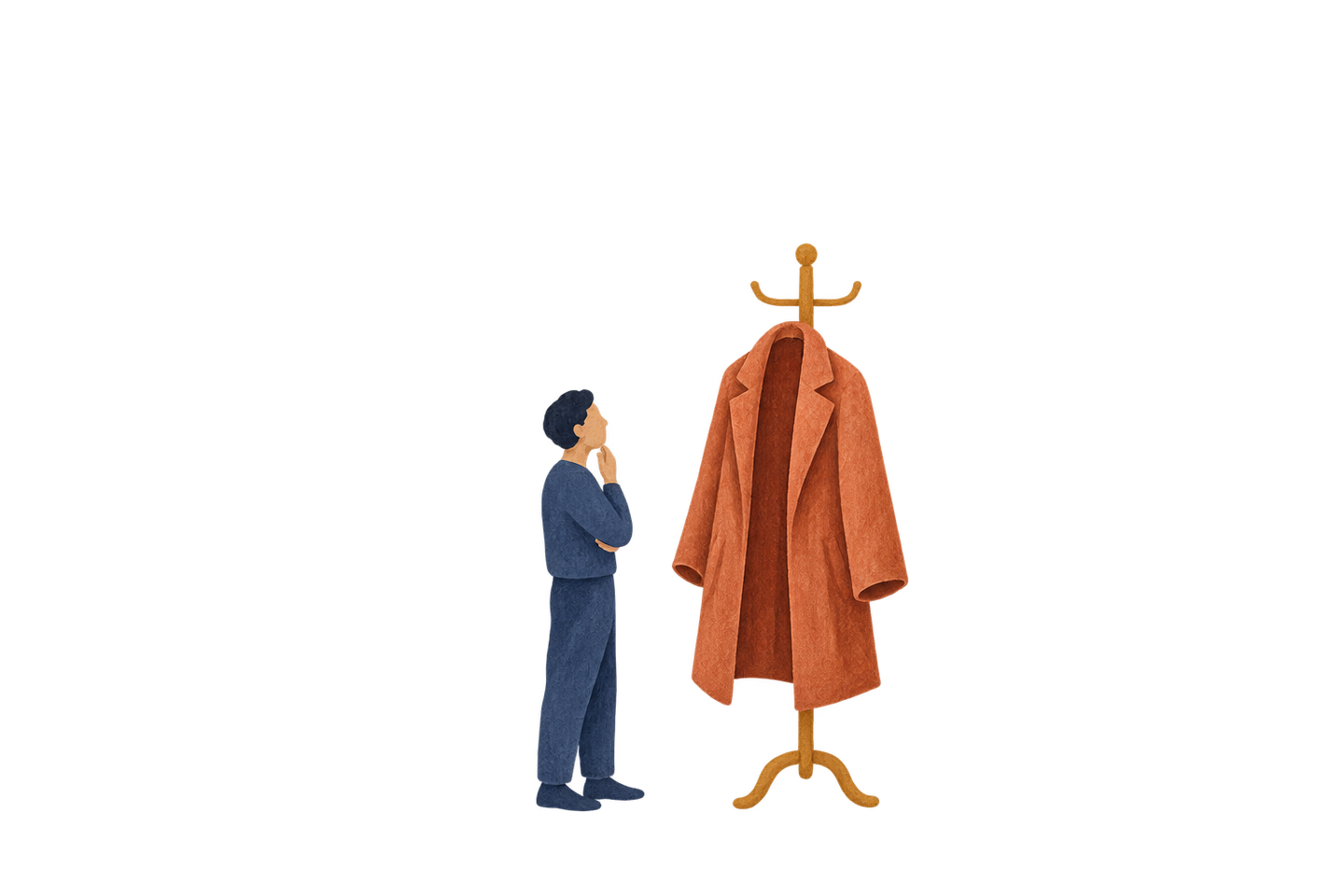
Clothes are only the metaphor in our illustration. An unassuming appearance does not establish good judgment, and an official uniform does not establish poor judgment. The question is what the person does, including how decisions can be questioned and corrected.
A correction arrives after you have decided
Suppose you have chosen a date for an event. A volunteer points out that the venue is unavailable. You could protect the appearance of control by blaming them for not mentioning it sooner. You could instead check the booking, acknowledge what the information changes and explain the revised plan.
That second response does not require abandoning the responsibility to decide. It makes the decision answerable to a relevant fact. If the objection turns out to be mistaken, you can show what establishes that rather than making the volunteer’s lack of authority the answer.
A private reminder may help, but it is not a substitute for a workable arrangement. Give people a way to raise a concern before commitments become hard to change. If your process requires everyone to wait for your mood to be right, the process needs attention too.
Choose one responsibility and one check
Name a role in which your decision affects someone else. Write what the role authorises you to do and what it does not authorise you to assume. “I choose the schedule” does not mean “I know every constraint.”
Choose one check that fits the responsibility: confirm a fact, ask who has not been consulted or make it clear how an error can be reported. Then carry out that check. The exercise is our modern application, not a procedure described in 6.30.
Return to the complete entry afterwards. Notice what its religious vocabulary and chosen model add that the modern example leaves out. A useful reading can help with an ordinary decision while still allowing the source to remain stranger and more demanding than a slogan about staying humble.