 Wiser by Day
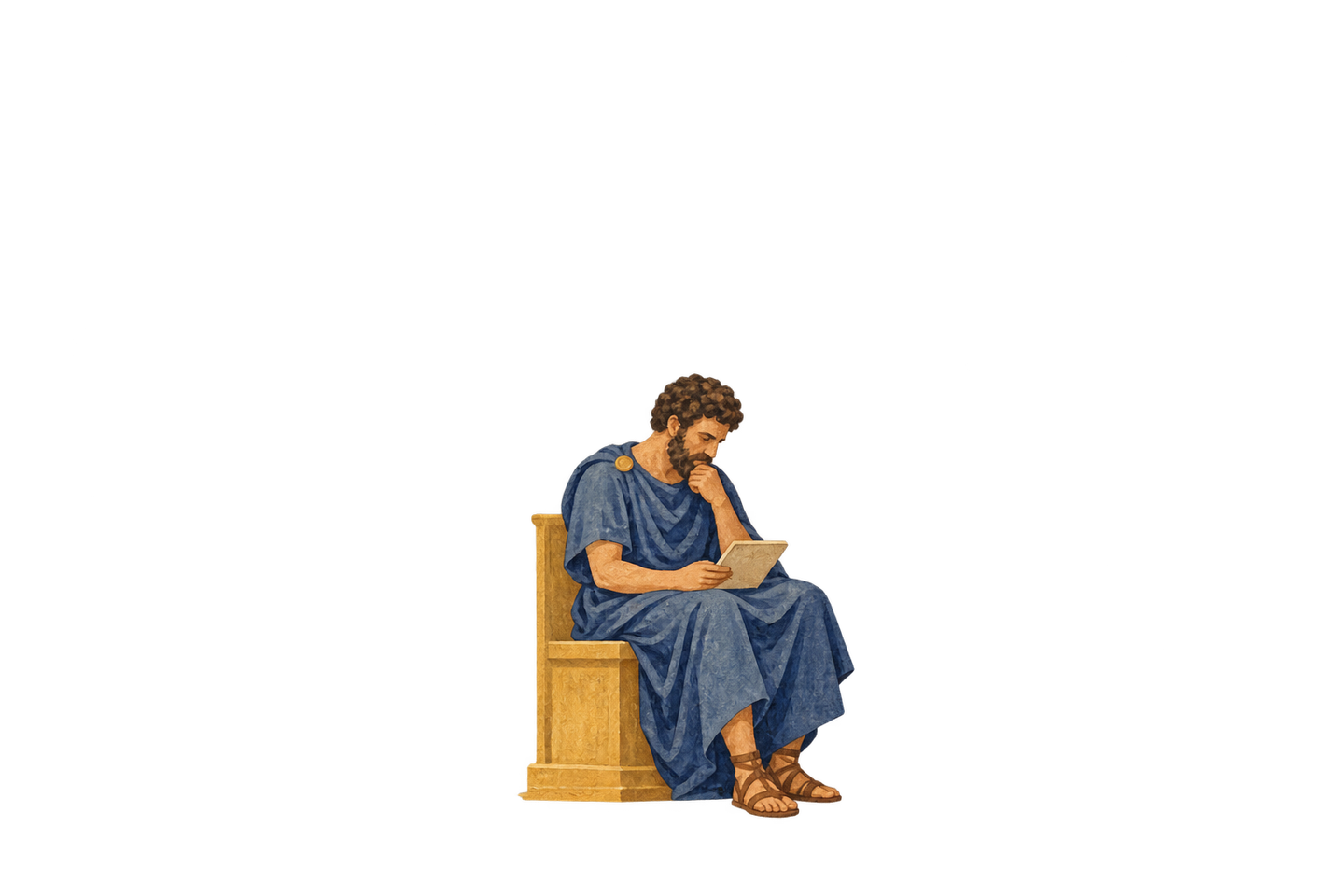
Read the reminders without building a pedestal
Someone recommends Marcus Aurelius because he was an emperor who wrote about character. It is tempting to make the combination its own proof: a powerful person who reflected must have used power wisely. Begin more carefully. His writing is valuable partly because it lets us watch someone repeatedly address his own judgment.
You can read a reminder closely without treating its author as your model in every respect. This profile asks how a person in authority tries to remain answerable. Our workplace examples are modern applications, not scenes from Marcus’s life or claims that managing a team resembles ruling an empire.
Three anchors for the life
- 121 CE · Birth
Marcus was born in the second-century Roman world and received an extensive education.
- 161 CE · Emperor
He succeeded Antoninus Pius. His philosophical commitments now accompanied imperial responsibilities.
- 180 CE · Death
His reign ended with his death. The surviving Meditations offers self-address rather than a complete record of that reign.
These dates are historical anchors, not a chronology for individual notebook entries. The Stanford Encyclopedia account places at least some of the writing in the later campaigning years; it cautions against assuming the book’s order supplies a straightforward sequence of events.
What is worth asking before you decide?
In a meeting, imagine being the person whose suggestion everyone accepts immediately. Agreement may be useful information, but it may also reflect the cost of contradicting you. Ask what would let someone raise a specific objection without having to challenge your entire position.
Try three questions in your notes: What reason supports my decision? Who will bear its cost? What information have I made awkward to bring me? These are our prompts. They do not reproduce a method Marcus sets out. Their value depends on what they help you notice and change.
A colleague might say the proposed deadline leaves no time to check the work. You can thank them while keeping the same unworkable deadline, or examine the constraint and make an adjustment. The second response gives reflection a consequence. A gracious manner alone cannot do that work.
Two entries to read with different questions
Begin with Meditations 1.7, where Marcus names Rusticus among his teachers and associates him with correction, careful reading and access to Epictetus’s discourses. Ask what it means to acknowledge that your character still needs work. George Long’s translation uses older English; compare the passage number rather than expecting identical wording in another edition.
Then read 6.30, the warning about the effects of imperial status. Our separate passage guide offers more context. Here, keep one question beside the entry: what habits does my position encourage that I would criticise in someone else? A warning against an influence does not prove the writer escaped it.
Keep the emperor in the picture
Marcus’s concern for justice sits beside the fact that he exercised imperial power. His reign included war and coercive government. A notebook about self-command cannot stand in for an assessment of the people affected by those institutions. Admiring an entry does not require calling the whole reign an ethical success.
Nor should a reader reduce Stoicism to keeping a composed appearance. If another person has been treated unfairly, looking calm while leaving the problem untouched is a weak response. Ask whether your interpretation makes you more willing to hear the complaint and act on relevant facts.
You may also find the writing severe or repetitive. Notice what the repetition is doing before turning it into a motivational instruction for everyone. The author is addressing himself from a particular situation; readers have different responsibilities, resources and limits.
Leave yourself a reminder someone else could check
Choose one decision in which you have a little authority. Write the concern you need to hear, the person you should consult and the action you will review. Keep the note modest enough to revisit. A sentence about becoming a better person is harder to check than a commitment to invite an objection before Friday.
Return after the conversation. Did you listen only until you could defend the original plan, or did the other person’s account affect it? Record the difference without borrowing Marcus’s reputation to validate your own intentions. Reading can open the question; your response supplies the next piece of evidence.